
This blog is a reflection on a book I’ve recently read; ‘What I Wish I’d Known When I Was Young: The Art and Science of Growing Up’ by Rachel Sylvester and Alice Thomson
Recently I’ve been reading the book What I Wish I’d Known When I Was Young, after hearing about it on BBC Radio 4’s Women’s Hour. The book is a fascinating journey through childhood adversity in the lives of some public figures, many of whom are very well known; Members of Parliament, celebrities, and charity workers. Throughout the book, they explore the high incidence of childhood trauma among many public figures and toying with the idea of post-traumatic growth.
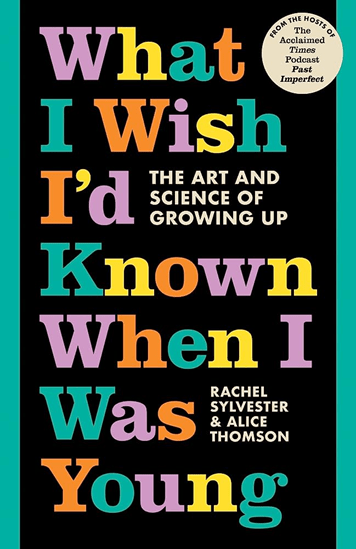
I flew through the book- It is fascinating to read the different challenges people have had and so refreshing to read about childhood adversity as being one part of otherwise triumphant life stories (for some). They cover the ways in which the ultra-self-reliance that some child-survivors develop out of necessity can be a strength when it comes to being bold and brave in their life choices and careers. They discuss the way that independent thought and creativity may develop because of experiences as children where people had to adapt and develop and make sense of adversity; some harmed children end up being adults who think differently than the rest.
The spurs that make you gallop
An interesting analogy in the book from a quote from Tony Blair;
“Having met a large number of very successful people in different walks of life. I think there’s usually a spur somewhere. Spurs are painful, but out of that comes an intensity of ambition or desire to achieve. That’s my general experience of the people who are successful – not always, but usually there’s been something in their background or their childhood or circumstances that has dug into them and made them break into a gallop.” (pg. 44)
That’s an interesting visual image there because what I’m what I think the success of this book is that it is refreshing to look at the positives. Part of me read this book and felt inspired. Childhood trauma and adversity is relatively common and maybe it’s hopeful to flip the narrative instead of always looking at the deficit model; the strengths and achievements of children who’ve lived with trauma. So, I think that was one of the big successes of the book.
There were 12 mentions of domestic violence in the book however they were all about the co-existence of DVA alongside a raft of other ACEs: mental health issues, substance use, and offending (among many others). So, there wasn’t really any examination of domestic violence on its own but rather as a myriad of other challenges that people go through. Perhaps that’s one of the book’s strengths. Lives can seldom be separated into neat categories of harm. However, like the ACEs discourse in general, it can mean that we are left conflating a huge raft of adversity without really digging into the specifics.
The Phaeton Complex and the desire to matter.
One of the kicking-off points of the book was the high number of UK Prime Ministers who’ve had bereavement loss which is disproportionate to the general population. They outline that “of 57 British prime ministers going back to 1721, twenty-five list one or both of their parents as a child … According to our analysis, two-thirds of these political leaders suffered a serious trauma in childhood” (pg. 3). In Sylvester and Thomson’s book, they reflect on the motivation for some child-survivors to stand for parliament. Part of it can be the desire to make the world a better place, which can be stronger for those who ‘know how bad things can be’. They also suggest that,
“Perhaps it is the combination of power and vulnerability offered by a political career that exerts such a magnetic pull on survivors … MPs have the chance to govern, and gain control over the world around them” (pg. 55).
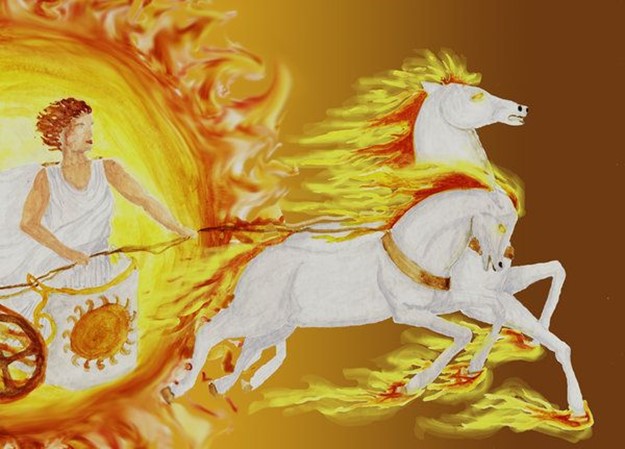
So perhaps it is the combination of being able to control or have a sense of control over your life, environment, and communities, which is attractive to child survivors. Perhaps they look to redress the chaos or the lack of control they had in childhood. The connection between childhood trauma and success as prime minister has been previously analysed by Lucille Iremonger (1970) in the book the Fiery Chariot: A Study of British Prime Ministers and the Search for Love which is encapsulated in the concept of ‘The Phaeton Complex’. This tries to make sense of the way in which childhood loss and trauma can ignite ‘the growth of abnormal ambition’ (p. 359). The name comes from the use of the Greek tale of Phaeton, who was an illegitimate child who became aloof, vain, resentful and foolhardy, ultimately driving his father’s chariot across the skies creating chaos (see here for more details). Ultimately the message is that the experience of loss and adversity (and in the case of many prime ministers, the deprivation of love/care in boarding school on top) causes a specific type of drive. Perhaps unsurprisingly I came across this concept previously when Boris Johnson was said to have this, being a child survivor of DVA who now has delusions of grandeur. It strikes me that this is more likely to be a gendered story of perceived masculinity (and power) deficit which is overcompensated against. Also writing about this issue, Berrington (1983) explored whether this can guard against the inner low self-esteem some adult child-survivors have.
“Success in politics offers a peculiar combination of rewards, amongst which both power and acclaim rank high … power offers protection against feelings of helplessness and insignificance: ‘if I have power no one can hurt me’. Prestige affords a reassurance against the sense of insignificance.” (Berrington, 1983, p. 369)
This sounds an awful lot like ‘mattering’. I became aware of the concept of mattering as being relevant to the experience of childhood trauma and adversity through the brilliant work of Luke Billingham and Keir Irwin-Rogers (2021, 2022). They used mattering to make sense of the way that children and young people cope (or struggle) with adversity.
‘We have a deep-seated need to matter to other people, and to matter in the physical world – to be a consequential causal force in both a social and material sense … we all want to be ‘someone’ – a person seen as significant by others – and we all want to be ‘something’ – an entity with some force or power in the world’ (Billingham & Irwin-Rogers, 2021, p. 5).
Mattering is about both feeling valued and being of value to others in your community (Prilleltensky, 2020). It is centred on feeling like a significant part of the world around us (Elliott et al. 2004). The fact is that many young people who live with abuse, neglect, and other challenges, do not have this sense of innate mattering. Many feel sure they do not matter, and are not heard. Childhood experiences of adversity, range from abuse, neglect, bereavement, poverty, addictions- or a combination of all of these and more as noted in the book. Billingham and Irwin-Rogers explored how marginalised young people perceive the ways that they do (or do not) matter, and how their experiences of trauma and marginalization impact on their fundamental sense of place in the world. Linking this back to Sylvester and Thomson’s book is almost a case of exploring the same trend but at the other end of the social spectrum- the desire to matter as a driver for adult child-survivors who end up becoming traditionally ‘successful’ people, whether through money, fame, or societal impact.
So, is the ‘spur’ of trauma the lack of mattering, or experience of anti-mattering through abuse or trauma in childhood?
Does success = mattering = happiness?
The question that I have been left with, which was also posed on the Women’s Hour interview mentioned earlier, was whether the overt successful life stories in Sylvester and Thomson’s book resulted in the combination of mattering and/or happiness, contentment or healing that they sought as child survivors?
Importantly they include a disclaimer in the book; many children who suffered trauma or tragedy don’t recover (or end up rich and famous!). We know that adult child-survivors of adversity have lifelong greater risks of addictions, health issues, mental health challenges. The authors note,
“For them adversity is not an advantage is an anchor that holds them back however hard they struggle to break free” (pg. 157).
And goes on to say that for some people,
“Success does not mean becoming Prime Minister getting an Oscar or winning an Olympic medal. It’s about survival. A real achievement for them is to hold down a job and not replicate in their own children’s lives, the despair they’ve themselves suffered.” (pg. 153)
Arguably, being generational cycle breakers is the most important change of all of them. Perhaps that is the most important and notable form of success?
But it’s interesting to consider the question of what is success?
What if those who ‘just’ survive are happier than the people who are driving, pushing hard for success at any cost because of a desire to matter?
If the dogged pursuit of goal after goal is about pursuing the feeling of mattering, a feeling of being seen, which (perhaps) ultimately these power positions don’t really give you in an authentic way, then where does it leave adult child-survivors in terms of wellbeing and happiness?
That is the unanswered question for me. I would have liked the follow-up question to these hyper-successful people to have been:
Did the pursuit of success make you happy?
Or did it bring healing?
Or soothing?
Did the external adulation make you feel you matter, in the end?
Or do the trauma-shaped holes endure?
References
Berrington, H. (1983). Prime Ministers and the Search for Love. In R. S. Albert (Ed.), Genius and Eminence. Pergamon Press.
Billingham, L., & Irwin-Rogers, K. (2021). The terrifying abyss of insignificance: Marginalisation, mattering and violence between young people. Oñati Socio-Legal Series, 1–28.
Billingham, L., & Irwin-Rogers, K. (2022). Against Youth Violence: A Social Harm Perspective. Policy Press.
Prilleltensky, I. (2020). Mattering at the Intersection of Psychology, Philosophy, and Politics. American Journal of Community Psychology, 65(1–2), 16–34. https://doi.org/10.1002/ajcp.12368


