
In today’s news (19th June 2023) an article in the Guardian newspaper has really struck me; ‘Child refugees could develop PTSD if locked up by UK, medical bodies say’ (Taylor, 2023). The article reports on an open letter signed by The Royal College of Paediatrics and Child Health, the British Medical Association, the Royal College of Psychiatry, the Royal College of General Practitioners and the Faculty of Public Health raising concerns about the potential catastrophic and lifelong trauma that the UK Government could inflict on vulnerable children as part of the Illegal Migration Bill.
As the article outlines, the current time limits for detention are; ‘24 hours for separated children; 72 hours for children in families; and 72 hours for pregnant women. Detention beyond those limits requires ministerial approval’ (Taylor, 2023). This change to attempt to criminalise asylum-seeking children appears to be part of a wider push of scepticism; framing adolescents who come to the UK illegally as ‘criminals’ rather than vulnerable children.
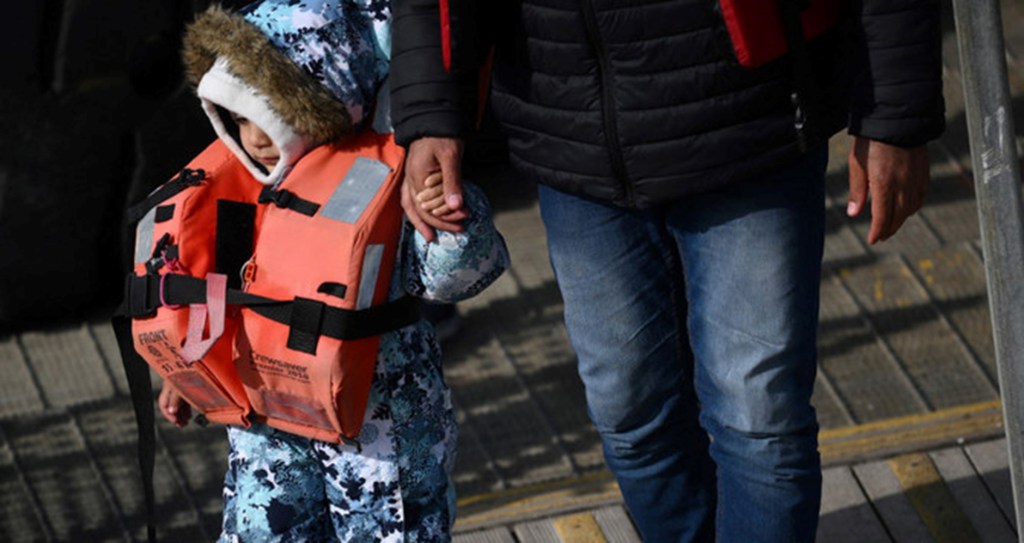
I have been watching this rhetoric increase over the past year (alongside worsening living standards in the UK, rising inflation, and numerous political scandals). It might be a distraction technique to pacify voters, but we are now at a point where it needs to be called out.
The UK Government wants indefinite powers to imprison vulnerable migrant children.
There has been an increasing drive of ‘adultification’ (Davis & Marsh, 2020) of vulnerable young people who are constructed as older and less vulnerable than they are. This has particularly been the case for Albanian young boys who have been framed by the UK Government as being un-deserved of help. Only last year, when shocking reports came to light about 88% of vulnerable children who were going missing from hotels that the Home Office placed them in were Albanian. MP Robert Gullis heckling in a discussion on the missing children in parliament shouted ‘Well they shouldn’t have come here illegally’ (Burke, 2023). Comments such as this highlight the adultification of migrant boys in public discourse. Sentiments which were repeated on the BBC Radio 4 Today programme when their reporter Mark Easton downplayed the severity of the missing children:
‘[T] hey are almost entirely people who say they are 16 or 17 [year old] Albanian males … these young people are almost all trafficked, sometimes willingly to be honest, they come knowing they are going to be employed by criminal gangs in the UK. They disappear as soon as they are able and then they are found to be working in car washes or cannabis farms. (BBC Radio 4, 2023; my emphasis)
Both of these commentaries prompted outrage from migrant advocacy charities who noted that by the definition of trafficking it is impossible to consent, not least to imply that children wish to be ‘employed’ by gangs. For more on this see Levell & Schwandner-Sievers, 2023). The conflation of potential trafficking with smuggling, ‘work’ with criminal exploitation, minors with adults, are the small xenophobic steps needed to construct a narrative around the undeserved outsiders. In the proposed Bill, irrationally, it claims,
‘We are also taking action to tackle the abuse of our modern slavery system by people seeking to thwart their removal once their asylum claim has been denied. Those subject to the duty to make arrangements for removal will not be able to access the modern slavery system in the UK. If someone is identified as a potential victim of modern slavery, we will ensure they are safely returned home or to another safe country’ (link here)
So, the result is a policy trap whereby the chance for dignity and support are diminished. If you are a child who has been trafficked, exploited, and a victim of modern slavery (of which three-quarters of cases reported to the NRM in 2021 were children, and 20% Albanian), then upon report it will be your illegal entry to the UK which will be the priority issue- potentially resulting in indefinite detention and removal. Victimhood, or child protection, will have disappeared for ‘illegal’ children. It is a scandal.
In this way, the boundaries are enforced between, ‘the included and the alienated.’ (Stumpf, 2006, p. 366). Juliet Stumpf’s (2006) “crimmigration” thesis outlined the way in which racialized penal policy has resulted in the convergence of immigration and criminal law. By constructing vulnerable children as criminals and gang members their humanity is diminished. Late last year the current Home Secretary Suella Braverman has referred to migrants as an ‘invasion’, claiming that;
‘Let’s be clear about what is really going on here: the British people deserve to know which party is serious about stopping the invasion on our southern coast and which party is not. Some 40,000 people have arrived on the south coast this year alone. Many of them are facilitated by criminal gangs, some of them actual members of criminal gangs. So let’s stop pretending that they are all refugees in distress. The whole country knows that is not true.’ (ITV News, 1/11/22)
The language of invasion was widely condemned, and a response by The Refugee Council noted this language was, ‘appalling, wrong and dangerous’ (Morten, 2022). The discourse is serving to gradually dehumanise migrants (but really only specific ones, as we saw Ukrainian refugees welcomed into UK homes with a government incentive scheme).
There is still some resistance within the UK Parliament itself. A report published on the 11th June 2023 by the Human Rights Committee raised the following concerns about the risk to children. We are talking about state-sanctioned child abuse on the basis of migration status;
‘Children are impacted by every aspect of the Bill. The Bill would allow families with children to be detained indefinitely at any place deemed ‘appropriate’ and for any period deemed ‘reasonably necessary’ … The Bill places the accommodation of unaccompanied children by the Home Office on a statutory footing, but no standards or safeguards for that accommodation appear on the face of the Bill. The threat of removal from the UK when the child turns 18 is likely to harm the child’s ability to live a healthy, happy childhood. It also gives them a perverse incentive to flee the care of authorities, rendering them extremely vulnerable to traffickers, exploiters and criminal gangs … The Joint Committee finds that the approach of the Bill in respect of children variously breaches or is likely to breach the rights of children under the UN Convention on the Rights of the Child and the European Convention on Human Rights.’ (Link here)
The UK Home Office seeking the right to indefinitely detain vulnerable children, prioritise their migration status over safeguarding, dehumanise them and classify them as criminals and gangsters, is something we all need to be concerned about.
Whipping up xenophobic, racist hate, and targeting highly vulnerable children is an abomination.
The state is requesting the right to dehumanise and further traumatise children due to their immigration status. Even if they were trafficked, exploited, and enslaved.
Not in my name.
References
Davis, J., & Marsh, N. (2020). Boys to men: The cost of ‘adultification’ in safeguarding responses to Black boys. Critical and Radical Social Work, 8(2), 255–259. https://doi.org/10.1332/204986020X15945756023543
Levell, J., & Schwandner-Sievers, S. (2023). Jeta e Rrugës: Translocal On-Road Hustle, Within and from Albania. In J. Levell, T. Young, & R. Earle (Eds.), Exploring Urban Youth Culture Outside of the Gang Paradigm Critical Questions of Youth, Gender and Race On-Road. Bristol University Press.
Morten, B. (2022, November). Minister warns on language after Suella Braverman “invasion” comment. BBC News. https://www.bbc.co.uk/news/uk-politics-63466532
Stumpf, J. (2006). The Crimmigration Crisis : Immigrants , Crime , and Sovereign Power The Crimmigration Crisis : Immigrants , Crime , and Sovereign Power. American University Law Review, 56(2), 367–419.
Taylor, D. (2023, June). Child refugees could develop PTSD if locked up by UK, medical bodies say. The Guardian. https://www.theguardian.com/uk-news/2023/jun/19/child-refugees-could-develop-ptsd-if-locked-up-by-uk-medical-bodies-say
 jadelevell.com