
This has been a whirlwind week because we have published new research with the National Child Mortality Database, looking at the case files of children who have died due to fatal knife crime.
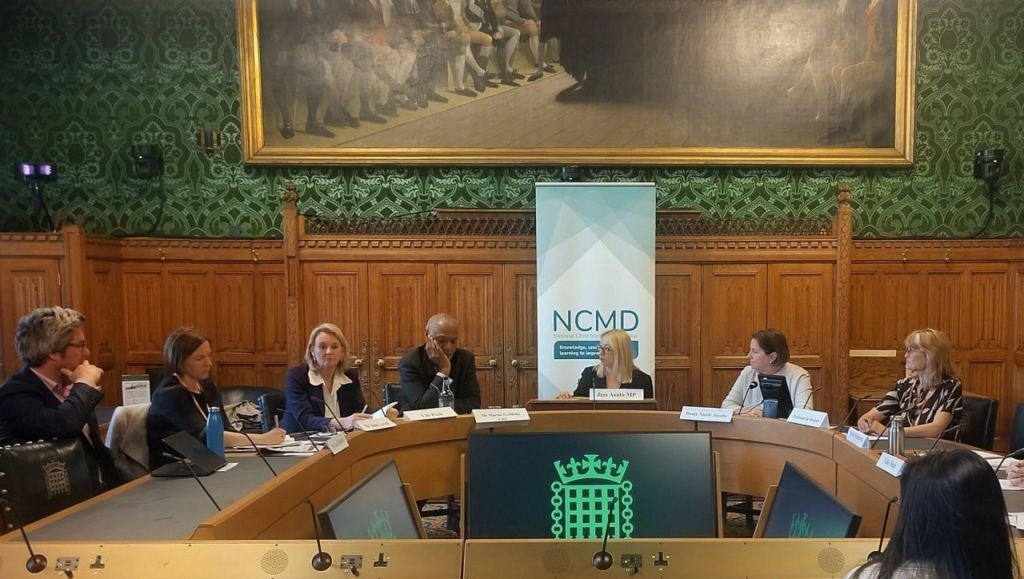
On Tuesday 21st April 2026 we launched this research in the UK Parliament. I have huge gratitude to Jess Asato MP for supporting us to bring our research to parliament; to Dame Nicole Jacobs for highlighting the importance of the findings for children who experience domestic violence and abuse; to Lib Peck and Professor Martin P Griffiths CBE for sharing such important reflections on the policy/practice implications of the findings; to Ruth Cadbury MP and Janet Daby MP for joining us; to co-researchers Jo Staines and Tom Roberts; and to Sylvia Stoianova and Vicky Sleap at the National Child Mortality Database for the essential work to collect this tragic data.
The research was reported on by the BBC, LBC, SkyNews, ITV, and more from across the world (145 news outlets so far!). I was interviewed by German newspaper Tagesspiegel.
The study was conducted in partnership with the National Child Mortality Database (NCMD), the first national system to collect standardised data on all child deaths in England. We used all available NCMD records from 2019–2024 to examine knife related deaths of children under 18. This provides the strongest national evidence to date on the patterns of fatal injuries and the adversity children experienced long before the moment of harm. Results report the demographics of 145 children who died and provides a detailed analysis of 58 cases.
The evidence is clear: knife crime prevention must begin in the early years. Our research suggests that children are receiving fast and appropriate care when they present with severe chest or neck wounds, but due to the severity of injuries suffered, too often there is too little time to save the life of the severely injured child. Preventing these deaths requires early, holistic interventions that address children’s first experiences of violence, understand their overlapping harms, and explicitly recognise concurrent and overlapping experiences of violence in private and public space.
We started this study with the intention to honour the lives of the children who had died by learning from their stories. Last night was an important step forward in creating change to support children at the earliest time they experience violence. Every time.
Shifting our thinking requires so much collaboration from all of us, each making up our respective pieces in the puzzle. Research is just one part of it. Please do keep me posted if you are able to use these findings and recommendations to push for change. I will help in any way I can.
The UK Government’s Safer Streets Mission aims to halve knife crime and halve violence against women and girls (VAWG) within a decade. While this ambition is welcome, our research findings raise two concerns. Firstly, treating ‘knife crime’ and domestic abuse as separate policy concerns obscures how these forms of violence intersect in children’s lives. Our research indicates that, even with specialist medical care, the most severe knife injuries sustained by young people are unsurvivable. This highlights our second concern; the limitations of a policing led, offence focused approach. Effective fatality prevention must begin much earlier, with interventions that recognise and respond to children’s earliest experiences of violence, most often occurring within the home.
My call is that children should have a right to violence support at the earliest time, every time.
Full policy brief and recommendations:Going Beyond ‘Safer Streets’: Reducing Fatal Knife Injuries among Children and young people in England | PolicyBristol | University of Bristol
Academic research papers (both are open access):
Qualitative research paper on in-depth case file analysis; Frontiers | Childhood violence across distinct, overlapping, and concurrent contexts: polyvictimization, polyperpetration, and missed interventions points among child knife crime fatalities in England
Quantitative research paper on injuries and medical care for stabbing injuries: Preinjury, injury and postinjury factors leading to death in children and young people who were victims of knife crime in England between 2019 and 2024: a review of the National Child Mortality Database | Emergency Medicine Journal

