
“Child first” likely means very different things depending on which sector you work in.
In the gender-based violence (GBV) sector, Child First is associated with a Women’s Aid campaign to make family courts safer for children and survivors and to prevent unsafe contact arrangements with abusive parents. In youth justice, however, Child First refers to something quite different: a guiding principle that children who come into conflict with the law should be treated as children first, offenders second. It is this second use of the term I am referring to in this piece.
Originating in academic work Child First has been adopted as a central principle by the Youth Justice Board in England and Wales. It reframes youth justice away from punishment and towards welfare, prevention, and rehabilitation. The main tenet is to ‘treat children as children’, focusing from the offence to the child; their development, their circumstances, and their potential.
In many contexts, this approach makes profound sense. It actively resists a system that has long been criticised as sexist, racist, and classist, disproportionately criminalising marginalised young people while overlooking the structural harms that shape their lives. Many children who enter the justice system do so after experiencing abuse, violence, neglect, and wider adversity. A Child First approach recognises that responsibility does not sit solely with the child, but with the society that failed them. It also acknowledges what we know about the harms of custody: that incarceration can deepen trauma and entrench offending rather than prevent it.
Recent UK evidence suggests a marked shift towards child‑perpetrated abuse, with over half of child sexual abuse cases now involving child offenders and proven sexual offences by children rising sharply (up 47% in a single year), alongside increases in misogyny, violent offending and arrests among young people.
And yet recent cases raise uncomfortable questions about whether Child First is working when the harm in question is gender-based violence, and when the victims are also young people.
When Child First Meets Gender-Based Violence
There are two recent UK cases which highlights the tension.
The first, widely referred to as the Fordingbridge three, involved three teenage boys (aged 14–15) convicted in 2026 of multiple perpetrator rapes of two girls, also aged 14 and 15. The offences were filmed and shared on social media. In total, the boys were convicted of 17 sexual offences. Despite the seriousness, they received youth rehabilitation orders rather than custodial sentences. The judge emphasised their age, development, and the importance of rehabilitation. This has caused national outrage, and due to public disdain the Attorney General has referred the cases to Court of Appeal.Last week an open letter was organised by the End Violence Against Women (EVAW) Coalition, and signed by 62 organisations, which they have delivered to Bridget Phillipson, the Secretary of State for Education to ‘express deep concern about the lack of action to prevent VAWG among young people’. The victims are now being represented by the feminist shero Dr Charlotte Proudman.
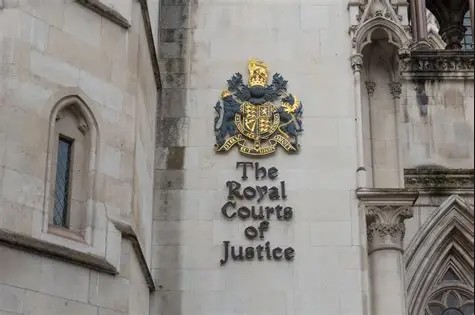
The second case is that of Callum Peacock, a teenage boy, who carried out a prolonged and severe campaign of psychological and physical abuse against his girlfriend, including setting fire to a photograph of her deceased grandmother and telling her she would “rot in hell.” Over a sustained three-hour attack, he assaulted her with weapons including a hammer, golf club, broom handle, and dumbbells, threw bleach and paint over her, attempted to burn her, and placed her in a chokehold while she tried to hide. The victim was left terrified and injured, curled up on the bathroom floor. Peacock admitted multiple offences, including assault and arson, but received a suspended 18‑month sentence with a rehabilitation requirement and a restraining order.
The judge noted, ‘In mitigation, you are young, in your teens still, and are clearly immature and ill equipped for adult relationships. You have no previous convictions, which makes a big difference, and I have read about your early life in care.” (Source).
These cases are distinct in several ways, the first was carried out under 18yrs, and the second over (19 yrs). However, in both the time served on remand was considered enough due to the young age and immaturity of the perpetrators, and so in court the victims saw the perpetrators receive community rehabilitation orders only.
The public and political reaction to these cases has been intense. But beyond outrage, they raise a deeper question: what happens when a child-centred justice system encounters child-perpetrated, yet child-directed gender-based violence?
A Deterrence Gap?
One concern is a widening deterrence gap. We already know that GBV is under-prosecuted. With rape conviction rates in the UK remaining extremely low (hovering around 1% of reported cases) there is a strong argument that such violence already operates within a context of near-impunity.
If, on top of this, the most serious offences committed by children are met with non-custodial, rehabilitative responses, what message does this send to girls and boys navigating a digital landscape saturated with extreme pornography, misogynistic influencers, and normalised sexual aggression?
In the recent VAWG Strategy the government committed to improved RSHE in schools, but without a strong societal message, broad educational programmes will only get us so far.
Seeing the few cases that make it to court (with significant amounts of evidence) result in non-custodial sentences is likely to compound the already limited number of cases that make it to court. How many parents watching these cases could honestly recommend their daughter go through the intensely retraumatizing court process to see these outcomes? It’s no secret that many working in the GBV field would already not recommend it. The ends often don’t the justify the means.
A Justice Gap for Child Victims
Equally troubling is what we could frame as an emerging justice gap. The Child First framework explicitly centres the child offender. As the sentencing remarks in the Fordingbridge case illustrate, the court’s focus is on rehabilitation, the child’s welfare, and avoiding unnecessary criminalisation. This is consistent with youth justice guidelines.
But where does that leave the victim?
Child victims of GBV already face multiple layers of trauma, which include the violence itself, the investigative and court process, long waiting times and case backlogs, the retraumatisation of giving evidence. After this, they may see the perpetrator receive a sentence focused primarily on their rehabilitation.
One victim in the Fordingbridge case described hearing the sentence felt like “a rock straight in my face”, in an interview she said, “What was the point in putting me through that?”, saying the judge’s decision “almost made it seem as if what the boys did was not OK, but it was OK in the eyes of the law because they were still children” (Source).
In reality what we are seeing is that in these cases that make it to court the perpetrator will have more ringfenced funded support to recover than the victim will.

This tension is not accidental, but rather reflects two broader, competing shifts in UK policy. On one hand, the youth justice system has moved towards less punitive, more welfare-oriented approaches for children. Yet on the other hand, the state has significantly expanded the criminalisation of GBV in recent years, particularly in response to technological change. New legislation associated with the Domestic Abuse Act 2021 and The Online Safety Act 2023 as well as updates to other existing acts with new offences targeting image-based abuse, cyberflashing, public sexual harassment, spiking, and coercive control have been introduced across major legislative frameworks. So we have a conundrum. GBV policy is becoming more punitive and expansive, whilst youth justice policy is becoming less punitive and more welfare-focused.
The Missing Consideration: Victim Impact
A key assumption underpinning Child First is that children’s responsibility should be understood differently from adults’, due to their developmental stage and reduced capacity. But what is often missing is an equivalent recognition of how victimisation impacts children differently from adults.
Experiencing GBV at a formative stage of life can have profound, long-lasting effects on identity, relationships, mental health, and development. Trauma will be likely more deeply embedded, not less. Under sentencing guidelines in England and Wales, targeting a vulnerable victim, especially a child, makes an offence more serious and can increase the sentence. Yet this doesn’t happen when the perpetrator is a child.
This can mean that we recognise the vulnerability of the child offender, but risk overlooking the heightened vulnerability of the child victim. This is doing a double disservice to young/child victims.
Prevention, Accountability, and the Limits of “Child First”
There is broad feminist agreement on one point: prevention matters. Many boy child perpetrators of violence are child victims of male violence who we failed to support early enough (see my earlier work on this). For me, this is a core feminist concern. However this can be true, alongside the dual truth that perpetrators need to be held to account when it does happen, despite their victim status.
Early intervention which is genuinely early, not at the point of criminal conviction, is critical. It is a long-standing failure of the system that meaningful support often arrives too late (Read here for more on this).
But prevention and accountability are not the same thing.
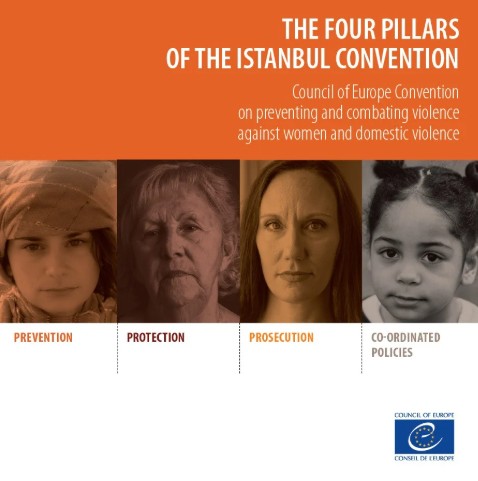
The UK has ratified the Istanbul Convention, which explicitly requires both prevention of violence and prosecution of perpetrators in its four key pillars, highlighting the need for, ‘Dissuasive Sanctions for perpetrators’. Although I think it is fair to say child-perpetrated GBV was not the focus in the development of the convention. We are seeing unprecedented times. Yet, a system that prioritises the welfare of the offender, while leaving victims feeling unseen or unsupported, risks undermining both.
It is also unclear whether there are GBV specialists who will be part of these young men’s ‘rehabilitation orders’. The Duluth model strongly shaped UK probation responses to domestic abuse through IDAP in the 2000s, yet its influence has waned over the past decade as programmes have shifted towards more generic, individualised behaviour-change approaches. So currently we are unsure whether there is a clear feminist, victim-centred framework has been lost in the process.
The questions we need to grapple with;
The challenge is not to abandon Child First, but to confront its limits. We need to ask:
- Does the UK Government’s commitment to improved RSHE really tackle the scale of the issue we are facing?
- How can we create systems (and fund them) so that child victims of violence are guaranteed funded and timely child-focused and specialist GBV support? (I am talking here about boy child survivors of DVA, as well as girl child survivors of GBV- both are essential).
- Why is genuine early intervention still so underfunded and inconsistent?
- How can youth justice incorporate victim-centred justice alongside child-centred offender approaches?
- What would meaningful accountability look like for child perpetrators of serious GBV?
- What guarantees do we have that the ‘rehabilitation orders’ are delivered with a gendered, feminist, and specialist understanding of GBV?
- Critically, how do we avoid creating a system where girls’ safety is implicitly deprioritised in the name of boys’ rehabilitation?
At present, there is a real risk that the turn towards recognising boys’ vulnerability becomes, unintentionally, a system in which girls bear the cost.
If Child First is to remain defensible, both ethically and politically, it must engage seriously with these tensions. Because a justice system that works for children must, ultimately, work for all children. Prevention of future harm must happen pre-conviction.

